Jakub Janda did an interview with Hluboká head coach Jim Malec
Young coach, coming from Michigan, coaching in Florida, coached in Austria, currently head coach of the Hluboká baseball club – A-team.
Early ages
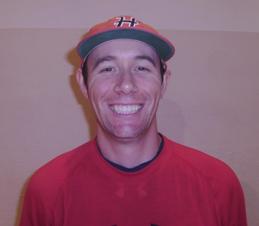 Jakub Janda: Jim, to start it off, how did you first came in touch with baseball ? Did you have roots in your family ?
JIM: Baseball has deep roots in American culture, so I grew up around the game. My father was a baseball lover and a strong supporter of the Detroit Tigers. He was never much of a player, but he started teaching about the game as early as I can remember. So my first baseball memories are of me and him together in our backyard. By the time I was 6, I was playing on organized teams.
JAKUB: How would you describe your early career till high school?
JIM: I grew up in Northern Michigan, which is not exactly a baseball rich area. It’s very cold there in the winter, so it’s more of an Ice Hockey place. I lived there until I was 13, and during that I mostly played Little League, which was about 24-30 games per year. When I turned 13, my parents started to see that I had a lot of talent, so we moved to Florida, which is a baseball Mecca. From that point on, through high-school, I played in over 100 games per year, usually for two or three teams.
My early days in baseball were exceptionally rewarding. Baseball teaches lessons like patience, emotional control and mental preparation. It’s very much a “thinking man’s” game, and the things I learned early on really equipped me to deal with challenges off the field.
JAKUB: How tough was it to close the door on competitive ball?
JIM: It was very tough. Until the age of 15, I was a dominating player because of my size and strength. But in America, top baseball players begin training around age 10, and I didn’t have enough good coaching to prepare me to be competitive at higher levels. I also stopped growing, and lacked some of the physical assets needed to compete in college and beyond. Coming to terms with those facts was the most difficult thing I’ve ever had to do.
JAKUB: When did you first came in touch with coaching ? Did your studies attach something to your baseball-life opinions?
JIM: I was never the strongest or fastest player on the field, but my understanding of the game gave me an advantage. In some ways, I always saw myself as a coach on the field. I would be directing my teammates and explaining strategy. And because I played on so many different teams for so many different coaches, I got to see, first hand, what worked and what didn’t. So the move into coaching was a natural transition for me. I started working with youth teams while I was in high school and took over as the high school pitching coach as soon as I graduated. I had always known, I think, that my greatest strength would be as a coach, not on the field.
I was lucky that throughout University I was able to study a cross-section of Sports courses that took a lot of my first-hand knowledge about coaching and sports and filter them through an academic lens.
Europe
JAKUB: When did you first come to Europe? What was the People-to-People project like?
JIM: I came to Europe in 2000 with a group of American teenagers. We were competitive players who were also tasked with promoting cross-cultural understanding. It was a great experience, and one that opened my eyes to a wide world and a wide world of baseball. I was lucky, because most American youths will never travel outside their country (except maybe to Canada or Mexico). Having the chance to see Europe shaped my worldview early on, and that experience had a profound impact on my thinking as I worked my way through University in my early 20s.
I hope that while I’m here I can still practice the goals of the People-to-People program. I think that while many American have misunderstandings about Europe, many Europeans have stereotypes about Americans and America that are usually only partially true. Especially over the past decade, the US has gone through a bit of a dark period. But there are a lot of good people in America who do care about the rest of the world and who are working to make the world a better place for everyone. I really hope that I can get to know people on a personal level and that we can talk about and share our experiences. I consider myself incredibly lucky to be here and to be able to learn and see things from a different perspective.
JAKUB: How would you characterize the European ball approach? Could you make some comparisons to US ball system?
JIM: It’s difficult to compare the two. Baseball is ingrained into American culture. Virtually every male child in suburban or rural America plays at least one season of baseball, and the vast majority of Americans will be done playing organized baseball by the age of 12, when typical “Little League” ends. So there’s a great fascination with the game, but also a shared cultural understanding about it–you never have to explain the basic rules of baseball to a 10 year old–they already know the rules, even if they’ve never played. And you never have to worry about loosing players because practice is too frequent or too hard…you can always find more players.
But there are some areas in which Europe has a better approach. Because the sport is smaller here, and because it’s new, I think there’s more focus on properly training coaches, which is key to strong development. There are so many bad youth coaches in America…most of them are fathers who played some ball when they were younger, but don’t know anything about the modern technical teachings. So most Little Leaguers never learn proper mechanics, which is bad, since baseball players are especially prone to bad habits that can be hard to break as they get older. The player pool isn’t as big here, but I think overall kids get better coaching in technical aspects–which means that there’s more consistency among the second and third tiers of players.
JAKUB: How was you campaign in Austria? Generally, how is baseball in Austria?
JIM: I’m extremely proud of what I accomplished in Austria. In my first year there, we won a club record number of games, despite serious injury issues. I’m thankful the time I had there and have no regrets.
In general, baseball in Austria is pretty weak. There seems to be a general cultural aversion to pushing players–especially young players–too hard. That leads to sloppy adult players who have a lot of bad habits and poor athleticism. Austrian baseball also suffers because of its league structure. It’s a small country with only a handful of population centers. Because of the promotion/demotion system, many of those population centers have teams that play in the 3rd or 4th league…if they have a team at all. I don’t believe there’s an active team in Salzburg. I don’t believe there’s an active team in Innsbruck. The team in Graz plays in one of the lowest leagues. The team from St. Poelten just re-formed. And so it’s very difficult to promote the sport when it lacks visibility in so many of the nation’s key areas.
JAKUB: Could you compare Czech and Austrian approach and overall baseball situation?
JIM: The baseball situation here in the Czech is much stronger in every respect. There are more players, better players, and more money being funneled into the system. There’s just a different attitude. It may be anecdotal, but in Austria I get this feeling like people think baseball will never prosper there. I get this feeling that people believe it’s doomed to fail. There’s a certain amount of fatalism tied to the sport. And so I’m not sure there’s as much passion and investment into building the sport on a national level.
Hluboká
JAKUB: How did you initially came in touch with Hluboká baseball club? What were your first impressions through the website and emails?
JIM: When my contract with the Stock City Cubs ended, I immediately began searching for a new position. From first emails between myself and the organization, I was impressed by the club’s professionalism and infrastructure. The organization communicated to me a strong desire to keep the club’s progress moving forward, and that was something I was excited to be a part of.
JAKUB: You are in Hluboká since late January. How would you describe your baseball and personal world over there?
JIM: Hluboká is a beautiful town, and since I’ve been living in Florida the snow is a welcome change of pace (although I wish I would have packed some warmer socks and shoes). Living in a small European town is a refreshing break from the hustle and bustle of daily life in the States. It’s nice to have some calm, quiet time to catch up on my reading and writing. And as far as the baseball goes, things couldn’t be better. So far, the team has met every challenge I’ve given them. I have every reason to believe it’s going to be a great season.
JAKUB: What do you think about the apartment you have been rented for free by the club main sponsor, Parkhotel Hluboká?
JIM: The staff at Park Hotel has been wonderful. They’re courteous, professional and friendly, and they’ve been more than willing to help me adjust to living in a new (and very different) place. And the living conditions are amazing–by far, it is one of the nicest hotels I’ve stayed in during my travels in Europe. I couldn’t possibly be more comfortable.
JAKUB: How were your first impressions after the first week?
JIM: It always takes a little bit of time to adjust to new surroundings, new people and a new culture. The changes can be jarring at first, especially considering the hectic pace of the first week. But my first impressions were very good. Having a comfortable place to stay and good food to eat made the transition very easy. And the club has done everything they could to make me feel welcome.
JAKUB: Is there anything that has shocked or impressed you?
JIM: I was immediately surprised by the raw athletic talent in the organization. There are a number of young players who are very skilled in certain areas and who would match up favorably, based on their age, with excellent American players. What those players lack, more often than not, is a connection between those skills and that athleticism and a baseball-centric outlook. One of my main goals this year is not just to teach players how to swing a bat, but how to approach hitting, from psychological and emotional standpoints. I think if those young studs are able to bring together their athletic skills for a more innate and natural understanding of the game, we might all be surprised by the outcome.
JAKUB: After a few weeks of practice, how do you see your team in 2010? What are your short-term and long-term goals for A-team of Hluboká?
JIM: I’m thrilled with what I’ve seen from the team so far. Obviously, it’s hard to do too much evaluating based on indoor practices. But there is a lot of talent in this organization, and a lot of young talent. The majority of our key guys are in their low 20s, which is a real positive thing for our future. I think we’re a well balanced team with only a couple of obvious weaknesses. There are a couple of positions where I think we’ll have an open competition, but otherwise we have a number of excellent ballplayers and I like our chances in 2010.
Our short and long term goals are to build a winning program that attracts news players and fans. That means, within a couple years, we’d like to promote to Extraleague. The Czech Republic already boasts one of the strongest baseball leagues in Europe, and it’s only going to get better. Interest is growing and it won’t be long until the top league is essentially semi-pro league. Hluboka has the infrastructure to be a main participant in that future; from great leadership to outstanding physical facilities, the groundwork is there. But to reach that point we have to fix the baseball end of things. So the short term goal, for this year, is to flush out any sense of sloppiness, lazyness or complacency that might have wormed its way into the club. I’m going to demand excellence from my players 100% of the time. And, fortunately, there is a whole group of youngsters biting at their heels. If people don’t meet that challenge, we’ve got capable players waiting to step in and step up.
Speaking long term, the focus here in Europe always has to be about the kids. We want to bring more kids into the program, and teach the kids who are already here proper mechanics and proper attitudes.
JAKUB: Describe Hluboká baseball club in five adjectives.
JIM: Organized, Professional, Talented, Young, Ready
 Thank you. Best luck to 2010.
Interview was made by Jakub Janda.
Mister-Baseball.com thanks Jakub Janda and Jim Malec for the Q&A